
Open the design assistant
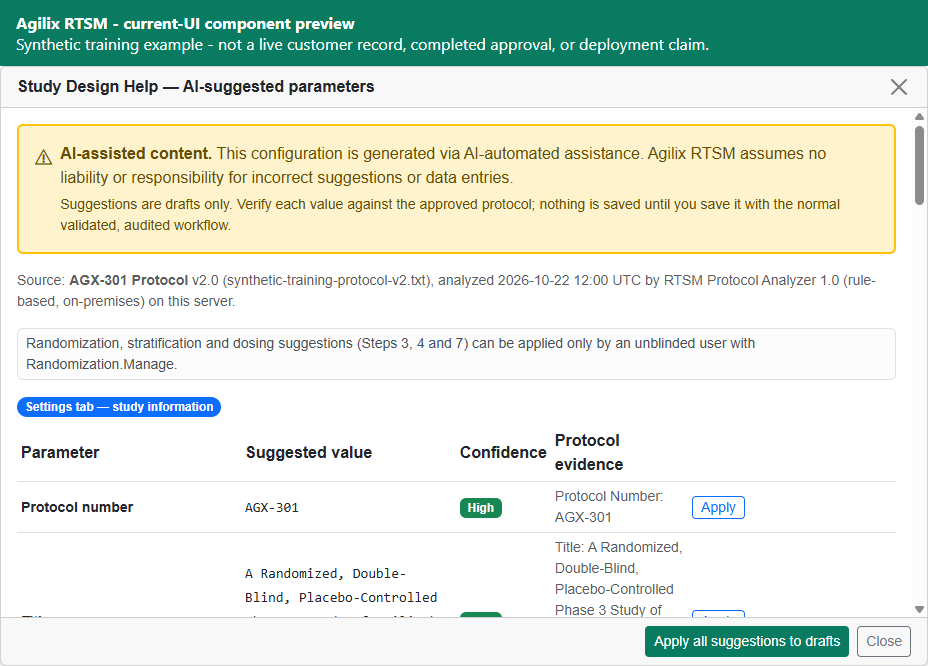
Content update: 22 October 2026. In the selected study, open Design → Study Design AI help. Select an active Protocol from that study's Study Documents, then choose Analyze protocol or Re-analyze. Confirm the displayed document version and analysis time before using suggestions.
Apply suggestions to drafts, not directly to operations
- Inspect the parameter, suggested value, confidence and supporting protocol evidence.
- Apply only values you have checked. Review the outcome message for each parameter; an unsupported or incompatible value must not be assumed to have applied.
- Review the Settings tab and use Save settings for those fields.
- Review every design step, then use Step 8 Save design. Master-randomization values at Step 10 use the master configuration save workflow.
- Obtain the separate second-person approval at Step 9 and complete the appropriate UAT and lifecycle controls.
Permissions and human responsibility
Randomization, stratification and dosing suggestions require an unblinded user with Randomization.Manage to apply them. Existing Account, study and design-lock rules still apply. The assistant cannot approve its own suggestions, override locked design settings or bypass a live-study amendment reason.
A later protocol version does not silently update an existing study. Re-analyze, compare changes and follow the approved amendment procedure. The approved protocol and human review remain authoritative.
This guide supports training and does not authorize clinical decisions, override access controls or establish regulatory compliance. The approved protocol and organizational procedures remain authoritative.